TERMS AND CONDITIONS OF MEMBERSHIP – CODE OF CONDUCT & PENALTY CODE
1. THE CONDITIONS OF MEMBERSHIP OF THE NETWORK
1.1. The collective mark may only be used by members of the network. The constitution of the network governs the conditions of membership of the network. These conditions include the following:
1.2. Members must be in possession of the documents stipulated in paragraph 5.2.
1.3. Members must be Liquified Petroleum Gas (hereinafter “LP Gas”) distributors and / or suppliers involved in supplying bulk LP Gas, filling LP Gas into cylinders and / or distributing full LP Gas cylinders to resellers and / or consumers for industrial, commercial, or domestic use.
1.4. Members must be fully compliant with the applicable legal framework and, in particular, with the provisions contained in the Pressure Equipment Regulations (PER) SANS 10087-7 and SANS 10019 (and any updates thereto).
1.5. Every member of the network must ensure that:
a. it carries out the required quality inspection and safety checks in respect of every LP Gas cylinder as required by SANS 10087-7 (Clause 9 – Inspection Procedure) before it is placed in service;
b. it fills each LP Gas cylinder with the correct volume of gas and should not underfill or overfill such a cylinder intentionally;
c. it sources LP Gas cylinders only from reputable suppliers;
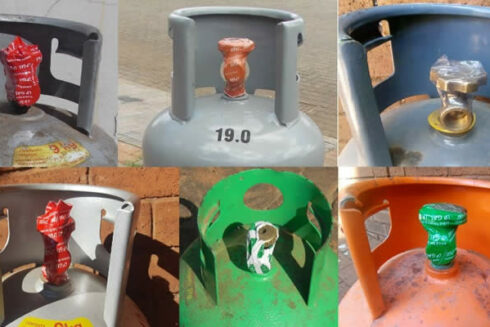
d. it does not sell commercially branded LP Gas cylinders that have been illegally filled;
e. it only exchanges empty commercially branded LP Gas cylinders with the branded owner or anyone of its legitimate contracted distributors;
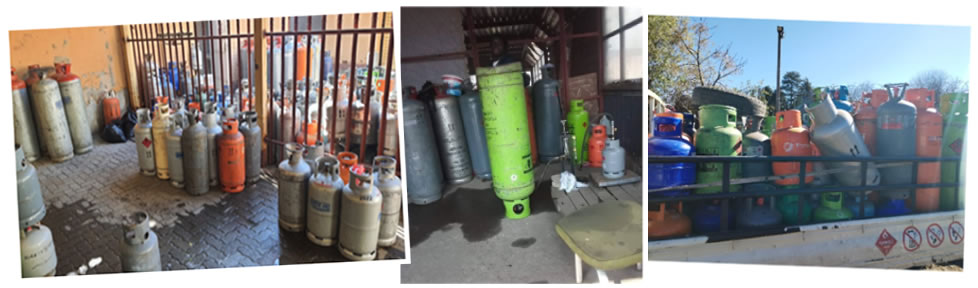
f. it does not stockpile commercially branded LP Gas cylinders, but undertakes to return such cylinders to the branded owner as soon as is possible on a one to one exchange bases or for a full deposit refund;
g. it refrains from supplying bulk LP Gas to distributors who are not fully compliant in terms of the provisions and regulations as required by the applicable law;
h. each LP Gas cylinder it fills and/or sells is safe for use;
i. its company and premises are fully compliant with the applicable legal framework;
j. its employees are trained, by a recognised institution, and is capable of handling, storing, transporting, and filling LP Gas as required by the applicable law (SANS 10087-7, Clause 8 – Operators (8.1, 8.2 & 8.3);
k. the chain of liability in relation to its goods and / or services is traceable.
2. CONDITIONS OF USE OF THE MARK
2.1. The right to use the collective mark will be subject to compliance with the following conditions:
a. The mark may only be used in connection with goods and / or services that are compliant with all provisions pertaining to the LP Gas industry as set out in the applicable legal framework and, specifically, the PER and SANS 10087-7.
b. The mark may only be used if the member operates with a valid Flammable Substance Certificate and from a premises approved by the Fire Department and the Local Municipality and is in possession of a Certificate of Conformity issued by a registered practioner.
c. The mark may only be used in relation to LP Gas cylinders originating from reputable and fully compliant LP Gas suppliers.
d. The mark may never be used in relation to commercially branded LP Gas cylinders that have been illegally filled.
e. The mark may not be used by members who terminate membership of their own accord or members whose membership is terminated by the network due to breach or contravention of the rules, and such parties must immediately cease usage of the collective mark.
3. DESCRIPTION OF GOODS OR SERVICES IN RESPECT OF WHICH THE MARK WILL BE USED AND THE MANNER OF USE
3.1. The collective mark will only be used in connection with “Liquified Petroleum Gas,” covered by class 04, and “Filling of gas bottles; gas supplying; distributions of gas; storage of gas”, covered by class 39, and will be used in the following manner:
a. The member must all times display its membership certificate and / or QR code (as provided by the network) openly on its premises and / or website for consumer to see.
4. FORM OF APPLICATION FOR GRANT OF AUTHORITY
4.1 Every application for the grant of authority for use of the collective mark shall be in the form set out in the application.
4.2 Copies of the following documents must be attached to an application for membership:
a. CK1 Company Registration Certificate from the Companies and Intellectual Property Commission;
b. confirmation of South African Revenue Services (SARS) registration;
c. a Flammable Substance Permit for the premises you operate from issued by the Local Fire Department;
d. If you are filling cylinders – Certificate of Conformity for the site installation issued by a Registered LP Gas installer;
e. acceptance of the code of conduct.
5. THE FORM AND DURATION OF CERTIFICATE
The network will issue a certificate in such form as it may deem fit to persons authorised to use the collective mark. Such certificate will be valid for 1 year and will be renewable for like periods on payment prior to the expiry of each period of a renewal fee.
6. SANCTIONS AGAINST MISUSE
6.1. In the event of misuse of the collective mark by any member of the network, the network will be entitled to take the following steps or actions:
6.1.1. Members who misuse the collective mark, will be subject to the disciplinary code and procedure contained in the constitution of the network.
6.1.2. In terms of the disciplinary code, membership may be terminated, and such termination will be communicated in writing.
6.1.3. In the event of failure to renew annual membership, the network may after 30 days block the member’s QR Code, but an email notification will be sent 7 days prior to activating the suspension block. The network will as soon as membership is renewed, remove such block from the member’s QR Code.
6.1.4. In the event of foreign filling and /or trading with Commercially Branded Cylinders , the network may impose the following sanctions:
a. First Contravention – 3 months block from membership.
b. Second Contravention – 6 months block from membership.
c. Third Contravention – 12 months block from membership.
d. Fourth Contravention – 24 months block from membership.
e. Fifth Contravention – Permanent block from membership
6.1.5. If a member fails to return empty LP Gas cylinders to its branded owner or stockpiles branded LP Gas cylinders, the network may impose the following sanctions:
a. First Contravention – a written warning.
b. Second Contravention – 1 month block from membership.
c. Third Contravention – 2 months block from membership.
d. Fourth Contravention – 3 months block from membership.
6.1.6. If a member sources illegally filled commercially branded cylinders that belongs to any supplier and/or distributor registered on the network, the network may permanent block their membership.
6.1.7. In the event of underfilling of LP Gas cylinders, the network may impose a one-month block from membership.
6.1.8. In the event of overfilling of LP Gas cylinders, the network may impose a six-month block from membership.
6.1.9. In the event of using or allowing untrained staff for filling of LP Gas cylinders, the network may impose a one-month block from membership.
6.1.10. In the event of failing to inspect LP Gas cylinders for leakage prior to filling or selling, the network may impose a one-month block from membership.
6.1.11. In the event that documents submitted in terms of paragraph 5.2 are found to be false, the network shall terminate membership and no re-application for membership shall be accepted within 5 years from the date of termination of membership.
I applied for membership on behalf of the above LP Gas Distributor. I hereby authorize The Safe LP Gas Distributors Network of South Africa, to verify any information and/or documentation supplied in this application through the relevant authorities and /or other channels available.
The Safe LP Gas Distributors Network of South Africa confirms that the information supplied in this application and the results of the verification of the information supplied in this application will only be used for the purpose of validating this application and in line with the Protection of Personal Information Act (POPI) of 2013.
On behalf of the mentioned LP Gas Distributor and Directors and/or owners, I uncondionally indemnify The Safe LP Gas Distributors Network of South Africa (The Network), it’s Directors, Officers, Agents, Servants and/or employees or any person acting on behalf of the Network from any and all Liabilities, losses, claims, Judgements, suits, fines, penalties, demands or expenses resulting from any incident or damages as a result of a cylinder(s) that was filled and/or sold by the applicant (Network Member) to any end user.
I represent and warrant that I am duly authorised and has the legal capacity to agree on the terms and conditions and the code of conduct for members of the network as stated in this document and confirm that this document is a valid and legal agreement between the Network and the LP Gas Distributor that I represent and is binding and enforceable in accordance with its terms and conditions.



0 Comments